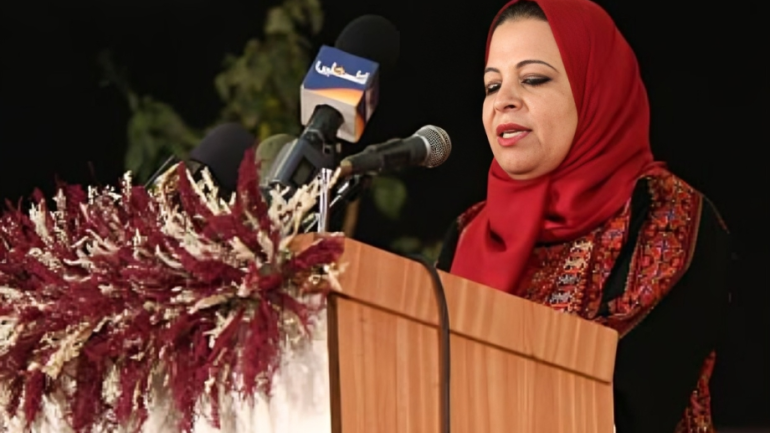
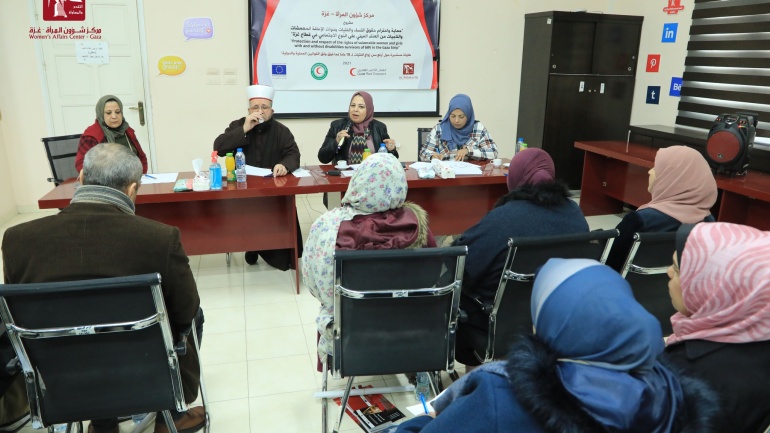
UN 427th Committee Meeting: Amal Syam, WAC Gaza, on Women’s Protection Crisis.
During her intervention at the 427th meeting of the United Nations Committee on the Exercise of the Inalienable Rights of the Palestinian People, held on 18 March 2026 on the margins of the 70th session of the Commission on the Status of Women (CSW), Dr. Amal Syam, Director General of the Women’s Affairs Center (WAC) in Gaza, highlighted the rapidly deteriorating humanitarian and social conditions facing Palestinian women and families amid the ongoing crisis.
Dr. Amal Syam stressed that the continuation of conflict, forced displacement, and the collapse of essential protection systems have created unprecedented challenges for women, children, and vulnerable households across Gaza and the occupied Palestinian territory.
Palestinian Women at the Center of a Deepening Humanitarian Emergency
Dr. Amal Syam emphasized that Palestinian women are bearing the heaviest burden of the ongoing crisis, facing intersecting vulnerabilities including displacement, loss of livelihoods, and restricted access to essential services.
She noted that structural barriers and movement restrictions continue to limit women’s ability to secure basic needs, access protection services, and participate in recovery processes, further deepening their socioeconomic marginalization.
Displacement and the Breakdown of Family Structures
According to Dr. Amal Syam, prolonged forced displacement has significantly reshaped family structures, resulting in overcrowded living conditions and the emergence of extended “survival households” that often lack privacy, safety, and adequate resources.
She warned that these conditions are increasing protection risks, particularly for widows, female-headed households, and adolescent girls, who are disproportionately exposed to insecurity and social vulnerability.
Rising Risks of Gender-Based Violence and Exploitation
Dr. Amal Syam highlighted that overcrowded shelters and displacement sites have contributed to a rise in gender-based violence, harassment, and exploitation.
She further warned about emerging forms of digital abuse, including the exploitation of women through online platforms falsely presenting themselves as humanitarian assistance channels, exposing vulnerable groups to misinformation and abuse.
Legal Protection Gaps and Long-Term Consequences
The intervention also underscored growing legal challenges linked to unregistered marriages, lack of civil documentation, and disrupted administrative systems.
Dr. Amal Syam cautioned that these gaps could have long-term consequences on women’s and children’s rights, particularly regarding identity, inheritance, custody, and access to essential legal protections.
Humanitarian Indicators Reflect the Scale of the Crisis
Participants at the meeting highlighted alarming humanitarian indicators reflecting the severity of the situation, including large numbers of unaccompanied children, rising levels of widowhood, and increasing disability rates resulting from ongoing violence.
Dr. Amal Syam emphasized that these figures represent not just statistics, but a profound humanitarian tragedy requiring urgent and coordinated international action.
A Call for Reconstruction and a Rights-Based Approach to Recovery
Dr. Amal Syam called for accelerating reconstruction efforts in Gaza and moving beyond temporary shelter solutions that fail to ensure dignity and safety for displaced populations.
She also urged a renewed understanding of Sumud (resilience), one that goes beyond survival to encompass dignity, protection, and sustainable recovery for women and families.
In conclusion, Dr. Amal Syam stressed that rebuilding Gaza requires more than physical reconstruction. It demands a comprehensive approach that strengthens social protection systems, ensures legal safeguards, and places women and vulnerable groups at the center of all recovery and development efforts.