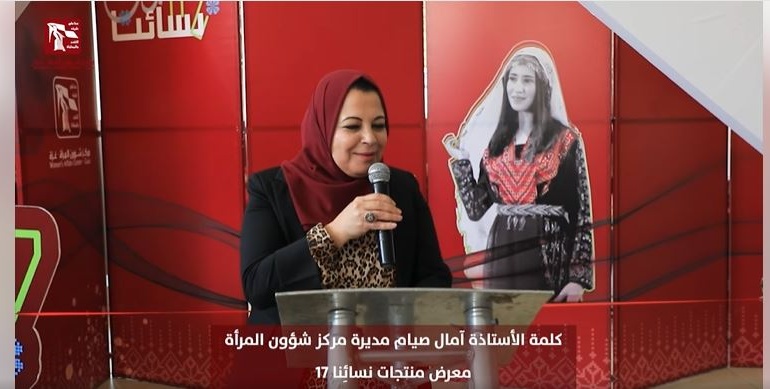
Amal Syam Highlights Emerging Social Challenges Facing Women and Families in Gaza
During the National Stakeholders Consultation Workshop held in December 2025 to discuss priorities for 2026, Ms. Amal Syam, Director General of the Women’s Affairs Center (WAC) in Gaza, drew attention to a number of emerging social challenges affecting women, children, and vulnerable families as a result of the ongoing war and displacement.
Displacement Is Reshaping Family Dynamics
Syam noted that prolonged displacement has forced many families to live together in overcrowded conditions, creating what she described as “super families.” While these arrangements can provide support and protection, they have also generated new pressures that disproportionately affect vulnerable family members.
Among the groups most impacted are young widows who have lost their husbands during the war and are increasingly facing economic and social hardships.
Child Marriage and Unregistered Marriages Raise Serious Concerns
One of the key issues highlighted by Syam was the documented increase in child marriage, driven largely by worsening economic conditions and the absence of sustainable protection mechanisms for families.
She also warned about the growing number of unregistered marriages, noting that this trend could lead to future legal challenges related to identity, lineage, and the rights of women and children.
Women Face New Forms of Violence and Exploitation
According to Syam, overcrowded camps and the lack of privacy in temporary shelters have contributed to increased harassment of women and girls in public spaces.
She further highlighted the emergence of digital exploitation, where women are exposed to harassment and misuse of personal information through online platforms claiming to provide humanitarian assistance.
Humanitarian Indicators Reflect Deepening Vulnerabilities
During the discussion, Syam shared alarming figures that demonstrate the scale of the humanitarian crisis in Gaza.
These include approximately 49,000 unaccompanied children, among them 17,000 children who have lost both parents, in addition to 22,000 newly widowed women and 34,000 people who have acquired disabilities as a result of the war.
“These numbers are not just statistics; they represent thousands of lives profoundly affected by conflict and displacement,” Syam stressed.
A Call for Reconstruction and a New Understanding of Resilience
Syam criticized the continued reliance on temporary shelter solutions, particularly tents, which are increasingly unable to withstand severe weather conditions and provide dignified living standards.
She called for accelerating reconstruction efforts and emphasized the need for a broader national dialogue on the meaning of Sumud (resilience), particularly for Palestinian women and children living through unprecedented challenges.
Concluding her remarks, Syam stressed that rebuilding Gaza requires more than physical reconstruction. It also requires strengthening social protection systems, preserving community cohesion, and ensuring that women and vulnerable groups remain at the center of recovery and development efforts.